
Managing contributions, processing grants, and maintaining charitable records are important parts of operating a fund. But many families want more from their philanthropic partner. They want to learn about the issues they care about, create a thoughtful plan for their giving, involve multiple generations, and make informed decisions about where their generosity can have the greatest impact.
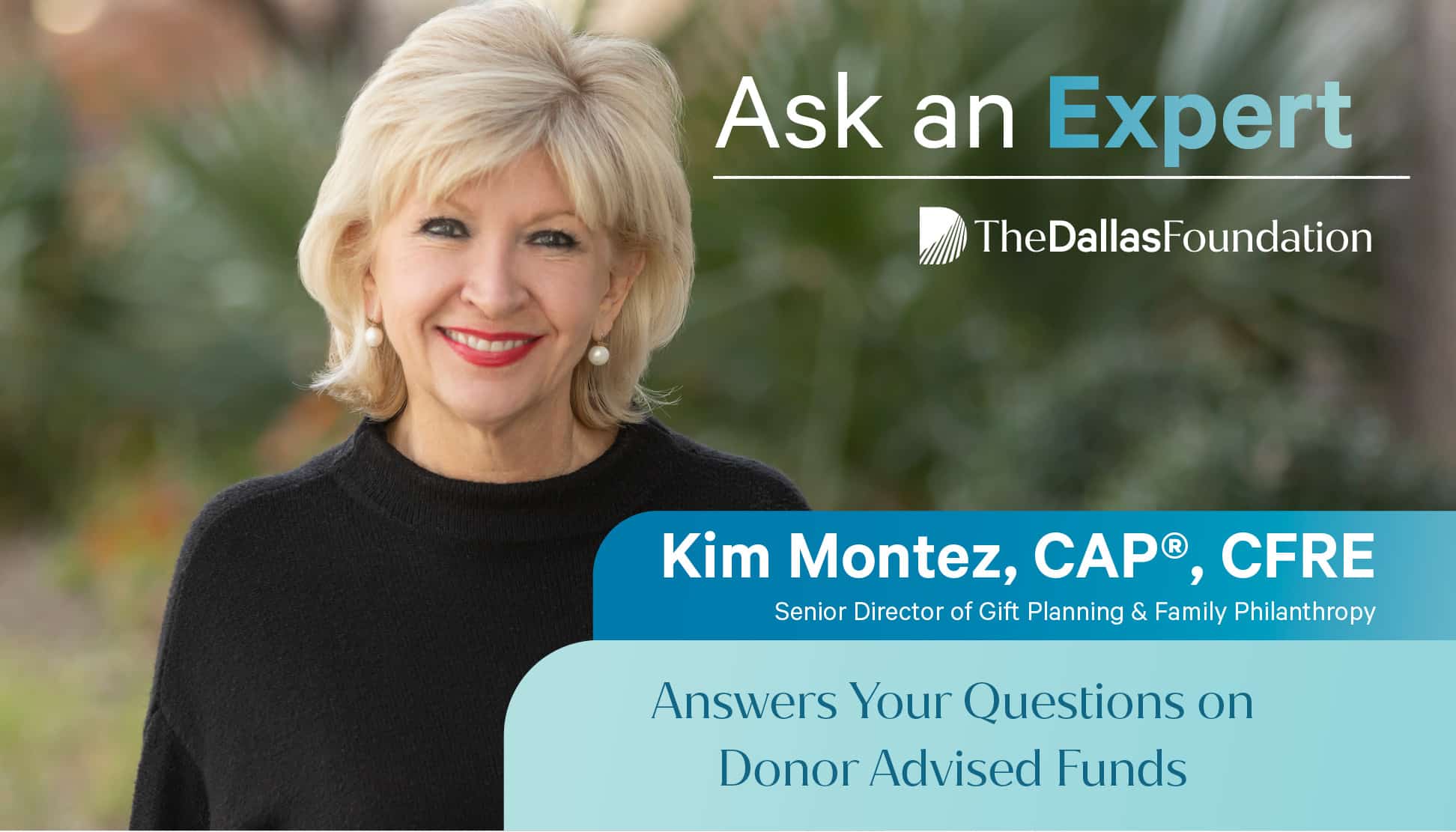
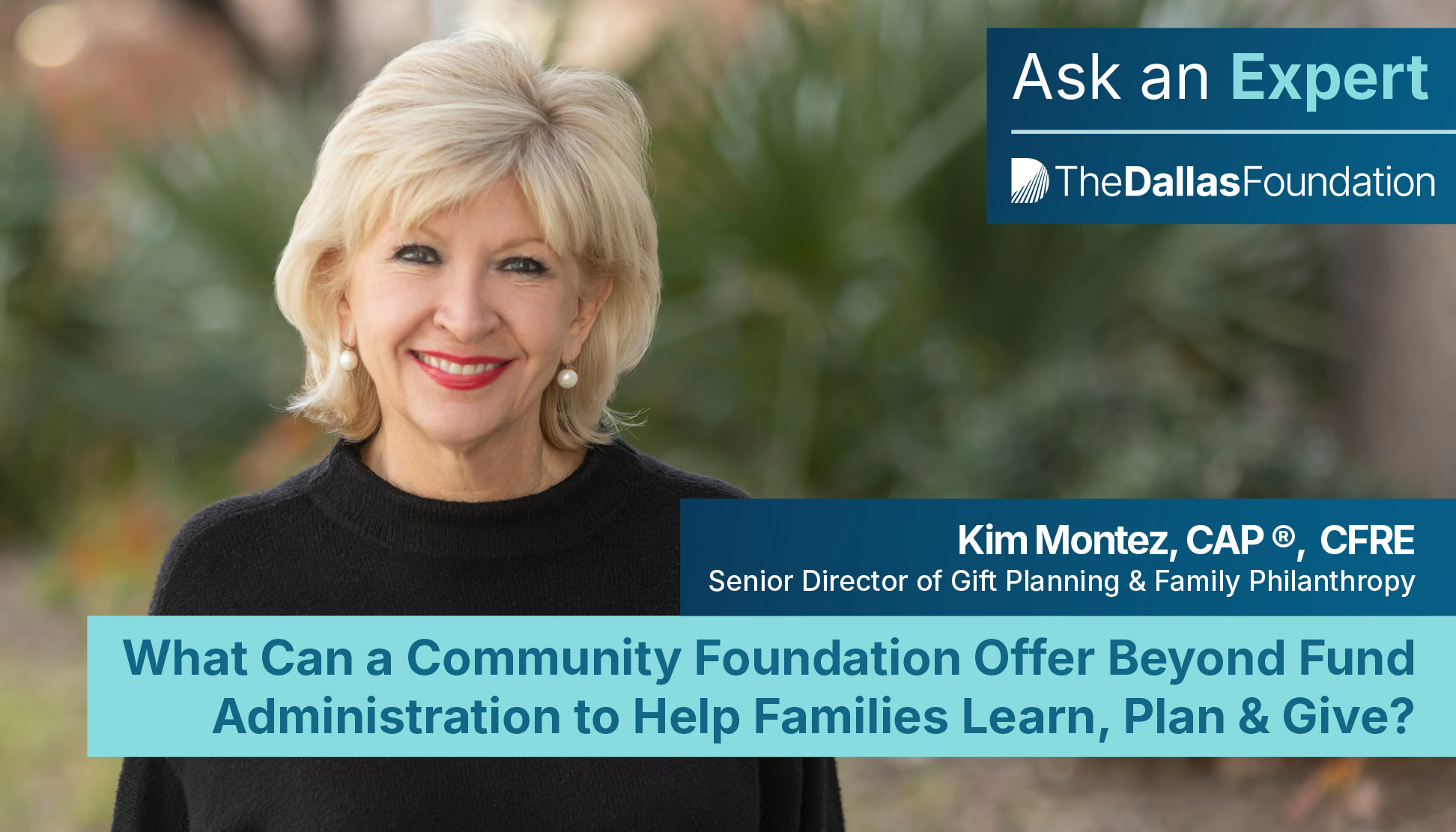
In this edition of Ask an Expert, Kim Montez, Senior Director of Gift Planning and Family Philanthropy at The Dallas Foundation, explains how a community foundation can provide the education, facilitation, and local insight families need to build a more intentional and meaningful giving practice.
What does it mean for a community foundation to offer more than fund administration?
Strong administration is essential. Families should be able to trust that their contributions, grants, records, and reporting are handled carefully and efficiently. But administration alone does not answer the larger questions families often bring to their philanthropy.
What do we want our giving to accomplish? How should we make decisions together? How can we involve our children or grandchildren? Which organizations are addressing the issues we care about effectively?
At The Dallas Foundation, our philanthropic advisors help families explore these questions, identify their shared values, and translate their goals into action. The fund is an important tool, but the relationship helps families use that tool with greater purpose and confidence.
How can a community foundation help families learn?
Families do not need to begin with all the answers. Some of the most productive philanthropic relationships begin with curiosity.
A family may want to better understand an issue affecting Greater Dallas, explore different approaches to addressing it, or learn more about the nonprofit organizations working in that area. Others may want guidance on evaluating grant opportunities or defining what meaningful impact looks like for their family.
Our role is not to tell families what they should care about or where they must give. It is to provide the information and context they need to make decisions that reflect their values.
Depending on the family’s interests, that support may include customized research, issue briefings, nonprofit evaluations, site visits, volunteer opportunities, educational events, or conversations with community leaders. These experiences help family members become more informed, engaged, and confident in their giving.
How can a community foundation help families plan together?
Giving together can strengthen relationships, pass down values, and create a shared sense of purpose. It can also raise challenging questions.
Family members may care about different causes, bring different levels of experience, or have different ideas about how decisions should be made. A philanthropic advisor can serve as a neutral facilitator who makes space for every voice and helps the family find common ground.
That support may include developing a family mission statement, establishing grantmaking priorities, defining roles, creating a decision-making process, facilitating family meetings, or preparing the next generation to participate.
The Dallas Foundation’s philanthropic advisors are also 21/64 certified. 21/64 provides specialized training and tools that help advisors guide multigenerational families through conversations about values, identity, legacy, succession, and decision-making.
For the families we serve, that means our advisors bring a proven, values-based approach to facilitation. They are equipped to navigate different perspectives, encourage meaningful participation, and help families move from conversation to a shared plan.
How does local insight help families give more effectively?
Families often know what they care about but may not know where to begin. They may be interested in early childhood, education, the arts, health, economic opportunity, or another community issue, but need help understanding the local landscape.
A community foundation brings knowledge developed through years of working alongside fundholders, nonprofits, civic leaders, and community partners. That perspective can help families understand where needs are greatest, what work is already underway, and which organizations may align with their goals.
Local insight is more than providing a list of nonprofits. It helps families ask better questions. What is driving this challenge? Where are there gaps in services or funding? Which organizations are positioned to create lasting change?
Because The Dallas Foundation is deeply connected to Greater Dallas, we can help families learn directly from the people closest to the work, identify potential nonprofit partners, and connect their generosity with broader community efforts.
Can a community foundation be an alternative to a private foundation?
For many families, yes.
Families often consider a private foundation because they want to create a philanthropic identity, establish a lasting legacy, involve multiple generations, and bring greater structure to their giving. A charitable fund at a community foundation can provide many of those same benefits without requiring the family to establish and operate a separate organization.
With a fund at The Dallas Foundation, families can name their fund, recommend grants, engage children and grandchildren, and designate future advisors. Meanwhile, our team handles grant administration, nonprofit due diligence, recordkeeping, reporting, and other operational responsibilities.
Private foundations have their own advantages, but they also carry ongoing administrative and compliance requirements. For example, private foundations generally must file an annual Form 990-PF and follow rules related to annual distributions, investments, charitable expenditures, business holdings, and transactions involving certain related parties.
A fund at The Dallas Foundation allows families to spend less time managing an organization and more time learning, planning, and giving. They also gain access to philanthropic advisors who can facilitate family conversations, conduct research, provide local insight, and help their giving evolve over time.
The right structure depends on each family’s circumstances, so families should make that decision with their legal, tax, and financial advisors. But for many, a community foundation offers a compelling combination of simplicity, family engagement, and personalized guidance.
A Partner for Learning, Planning, and Giving
Families should not have to choose between a well-managed charitable structure and a deeply personal philanthropic experience. A community foundation can provide both.
At The Dallas Foundation, we help families learn about the issues and organizations shaping Greater Dallas, develop a shared plan for their philanthropy, and put their values into action. We can also provide an effective alternative to a private foundation, allowing families to preserve their philanthropic identity and involve future generations without carrying the full administrative responsibility themselves.
Whether a family is beginning its giving journey or preparing to carry a legacy forward, our philanthropic advisors provide personalized guidance every step of the way.
If your family wants to take a more intentional approach to philanthropy, we invite you to connect with our team and begin the conversation.