
For many fundholders, a donor-advised fund (DAF) is an elegant solution: simple to establish, flexible to use, and immediately effective at separating the tax decision from the giving decision. But as a fundholder’s philanthropic vision matures, or as their estate and financial circumstances grow more complex, advisors increasingly find themselves asking a deeper question: Is a DAF still the right tool, or has the time come to consider something more?
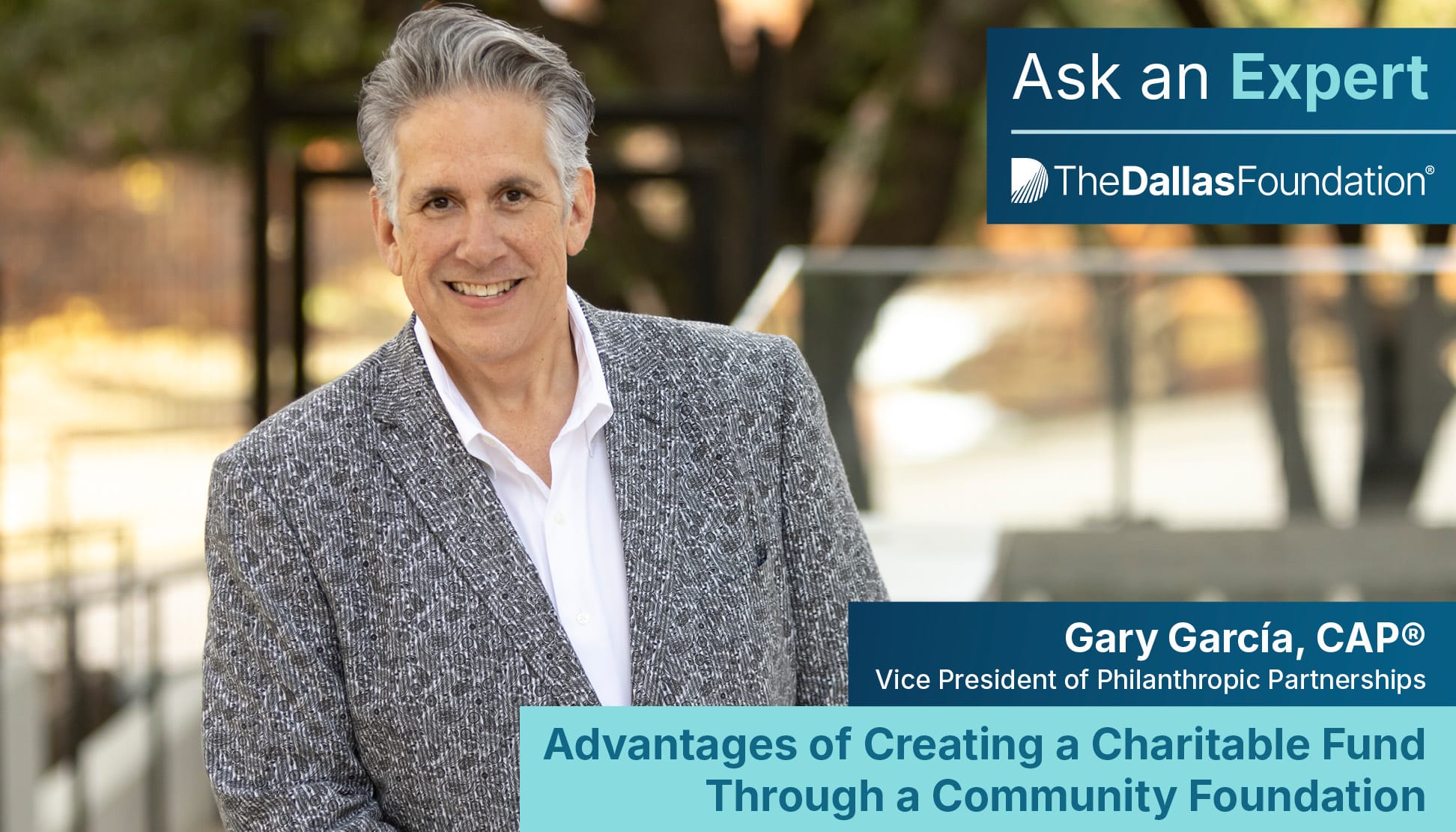
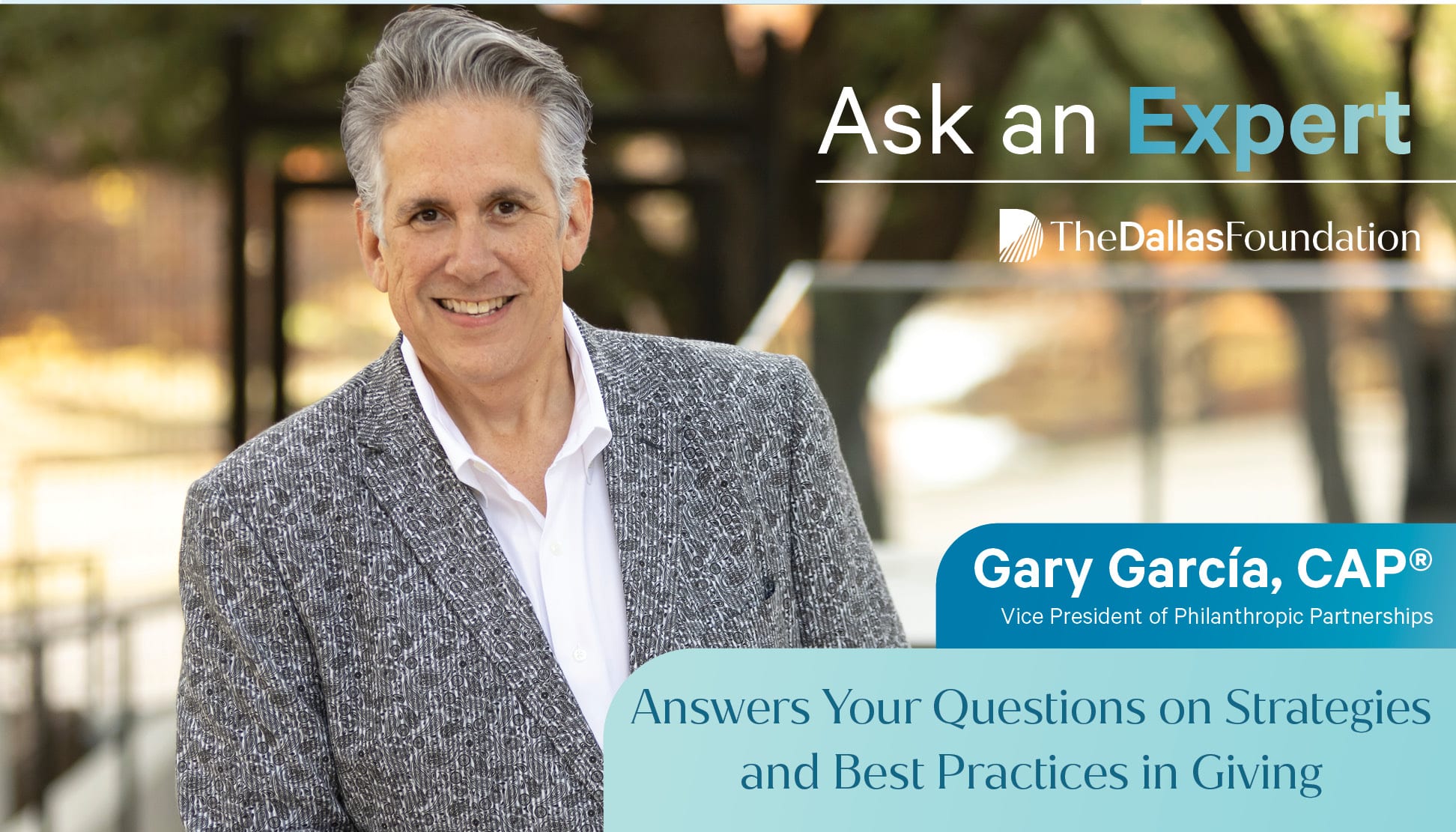
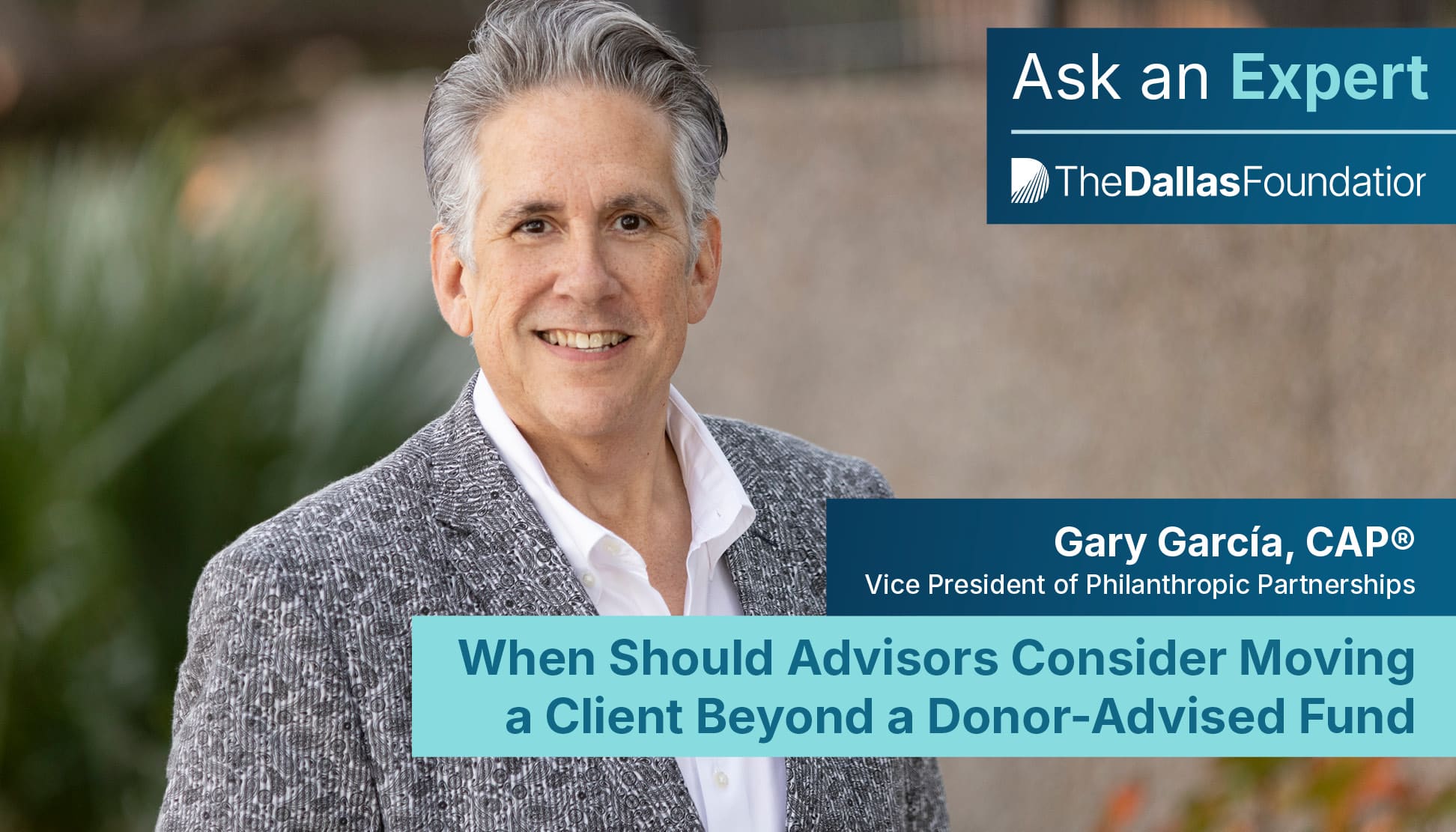
In this edition of Ask an Expert, Gary Garcia, Vice President, Philanthropic Partnerships and Chartered Advisor in Philanthropy (CAP®) at The Dallas Foundation, walks through the key factors advisors should weigh when evaluating whether a donor-advised fund is sufficient, and when an endowment, supporting organization, or more complex charitable structure better serves the fundholder’s long-term intent.
What makes a donor-advised fund the right starting point for most fundholders?
A DAF is one of the most versatile charitable tools available, and for good reason. A fundholder can make a tax-deductible contribution in a high-income year, receive the deduction immediately, and then recommend grants to nonprofits over time. There’s no annual distribution requirement, no need to file a separate tax return, and no ongoing administrative burden for the fundholder. For advisors working with clients who want to give charitably but haven’t yet defined the full scope of their philanthropy, a DAF creates breathing room. It lets the fundholder act on the tax opportunity today while the giving strategy continues to take shape.
At The Dallas Foundation, we work with fundholders at every stage of their philanthropic journey. For many, a donor-advised fund is exactly what they need: a giving account that grows alongside their other assets and can be used to support causes they care about, both now and in the future. The question isn’t whether a DAF is “good enough.” It’s whether it’s the right fit for what the fundholder is actually trying to accomplish.
At what point should advisors start asking whether a DAF is still sufficient?
The most important signal is a shift in the fundholder’s intent. When a fundholder moves from “I want to give charitably” to “I want to create a lasting institution” or “I want this fund to serve my family’s values for generations,” the conversation has fundamentally changed. A DAF is not designed to be a perpetual institution in the same way an endowment is. It doesn’t carry the same formal governance structure, and the fundholder’s advisory role doesn’t automatically transfer to heirs in a structured way.
Other signals worth noting include the size of the charitable asset itself. A very large DAF balance, particularly one that reflects a significant liquidity event, business sale, or estate transfer, may warrant more intentional structure. Similarly, if the fundholder has a specific charitable purpose in mind, such as supporting a particular institution in perpetuity, funding a scholarship program with defined eligibility criteria, or making grants restricted to a single cause area, a named endowment or restricted fund may better reflect and protect that intent over time.
How does an endowment differ from a DAF, and when does it become the more appropriate choice?
An endowment is a permanently restricted fund where the principal is preserved and only a portion of investment earnings (typically calculated as a percentage of the fund’s average market value) is distributed each year. This structure is designed for permanence. It is the right choice when a fundholder’s goal is to create a reliable, ongoing source of philanthropic support rather than to deploy assets over a defined period.
At The Dallas Foundation, a named endowment can be established to support a specific organization, a field of interest, or a scholarship. The fund continues to generate grants in the fundholder’s name, or in honor of someone they wish to memorialize, indefinitely. This is especially meaningful for fundholders who want their legacy tied to a cause or institution in a durable way that a DAF, with its more flexible and advisory structure, is not built to replicate.
Advisors should consider an endowment when the fundholder expresses a desire for permanence, when they want grants made automatically to a specific organization without ongoing oversight by family members, or when they want to ensure that the charitable purpose cannot be redirected over time. A DAF, by contrast, is inherently flexible, and that flexibility is a feature, not a flaw, until it conflicts with the fundholder’s actual intent.
What role do supporting organizations and other complex structures play, and when are they warranted?
Supporting organizations are a more advanced option: a type of public charity that maintains a formal relationship with one or more public charities, including a community foundation. They offer greater fundholder involvement in governance than a DAF, and they can be appropriate when a fundholder or family wants to maintain an active role in directing a charitable entity while still benefiting from the infrastructure and oversight of an established institution.
From a practical standpoint, supporting organizations are typically considered when the charitable asset is substantial, when the family wants formal fiduciary involvement in grant decisions, or when the fundholder is operating a charitable program with enough complexity: multiple grantees, specialized criteria, professional staff: to warrant its own legal structure. They are not appropriate for every situation, and they come with their own compliance and reporting requirements.
For advisors, the key is to avoid defaulting to complexity when simplicity will serve. A supporting organization or private foundation may offer more control, but they also require more administration, governance, and legal attention. The question should always be: does the additional structure actually serve the fundholder’s charitable goals, or does it create overhead without adding meaningful value?
What practical framework can advisors use when evaluating which structure is right for a client?
I encourage advisors to think through four dimensions when evaluating charitable structures on behalf of a client.
The first is intent and permanence. Is the fundholder’s giving purpose well-defined and long-term, or is it still evolving? A DAF accommodates evolution; an endowment is better suited to a fixed, permanent purpose.
The second is control and governance. How much direct involvement does the fundholder, or their family, want in ongoing grant decisions? A DAF offers advisory input; a supporting organization or more complex structure offers formal fiduciary authority.
The third is scale. The size of the charitable asset matters. A modest giving account is well served by a DAF. A transformational gift, particularly one tied to a liquidity event or a significant estate transfer, may benefit from more intentional architecture.
The fourth is legacy and family engagement. Does the fundholder want future generations involved? If so, how? A DAF can name successor advisors, but it doesn’t create a governance structure or institutional identity the way a named endowment or supporting organization can.
No single tool is universally superior. The best structure is the one that most faithfully reflects what the fundholder is trying to accomplish: now and over time.
Helping Clients Give with Clarity and Confidence
The donor-advised fund remains one of the most powerful and accessible charitable vehicles available, and for many fundholders, it will continue to be the right choice throughout their philanthropic lives. But as a fundholder’s giving grows in scale, sophistication, and generational ambition, advisors play a critical role in ensuring the structure keeps pace with the intent.
The Dallas Foundation works closely with professional advisors to help clients evaluate the full range of charitable giving options: from donor-advised funds and named endowments to supporting organizations and field-of-interest funds. Our team can serve as a resource for advisors navigating these conversations with clients, providing guidance on structure, administration, and long-term stewardship.
Advisors interested in learning more about how The Dallas Foundation partners with professional advisory teams are encouraged to reach out directly. We’re here to help ensure your clients’ generosity is structured to last.