







When a crisis hits a community, the needs that emerge are immediate and complex. People face sudden disruptions to their health, safety, and basic necessities, while local organizations and nonprofits work tirelessly to respond. Community foundations play an important role in supporting these efforts by connecting resources to where they are needed most.
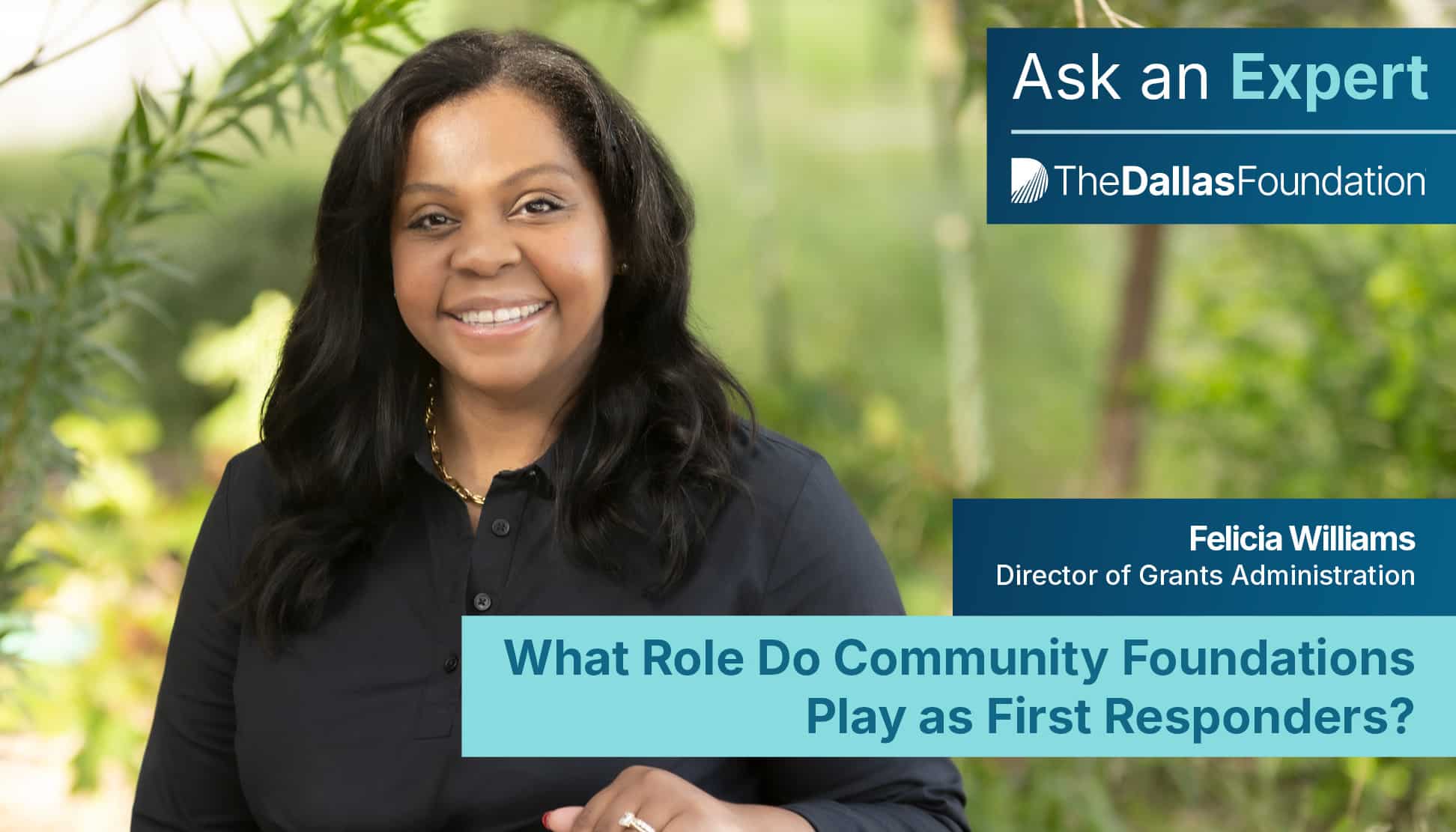
In this edition of Ask an Expert, Felicia Williams, Director of Grants Administration at The Dallas Foundation, shares how community foundations respond when urgent needs arise, both within the Dallas region and beyond.
How do community foundations function like first responders when a crisis hits?
Community foundations may not wear uniforms or respond to emergencies in the way firefighters or paramedics do, but they are often among the first to mobilize philanthropic resources. Their work focuses on identifying urgent needs and connecting funding and support to organizations best positioned to respond.
By leveraging deep knowledge of the local landscape, foundations can quickly assess situations and direct resources where they will have the greatest impact. This may include launching relief funds, disbursing emergency grants, or coordinating with public and private partners to support services such as shelter, food access, medical care, and crisis counseling. Because they maintain strong relationships with local nonprofits, donors, and civic leaders, community foundations can respond faster and more thoughtfully than many larger or national funding sources.
What are some examples of The Dallas Foundation responding to crises?
The Dallas Foundation has helped communities during both local and widespread disruptions. During the COVID‑19 pandemic, the Foundation administered the Mayor’s Disaster Relief Fund, directing grants to nonprofits addressing urgent needs such as food access, childcare, and workforce support. When SNAP benefits were temporarily paused, the Foundation provided emergency funding to local food providers so families could continue to access nutritious meals.
Community foundations also respond to natural disasters. Tornadoes in North Texas, flooding in the Texas Hill Country, and wildfires in California have all required rapid coordination and support. The Foundation works with local and regional partners to ensure resources reach those who need them most.
Foundations also support communities in moments of trauma. After the 2016 ambush shootings that killed Dallas police officers, the Foundation helped establish a Line of Duty Fund to support the officers’ families and provide a place for the community to contribute to recovery and healing. These examples show that being a first responder in philanthropy involves both addressing urgent needs and supporting longer-term resilience.
How do community foundations support recovery beyond immediate relief?
After the initial response, community foundations continue to help communities rebuild. They provide ongoing support to nonprofits to maintain critical services and ensure recovery efforts extend beyond the first days or weeks of a crisis. Foundations also help connect donors with longer-term needs, such as programs addressing housing, economic stability, or mental health, strengthening communities for the future.
Prepared philanthropy allows foundations to act quickly and effectively. When donors support flexible funds or disaster response initiatives before a crisis occurs, foundations can deploy resources immediately, helping local organizations sustain their work and ensuring communities are better equipped to respond and recover.
Why are community foundations uniquely positioned to respond?
Community foundations combine local knowledge, trusted relationships, and flexible resources. They understand the nonprofit ecosystem and know which organizations are most capable of responding to urgent needs. They coordinate with donors, nonprofits, and civic leaders to ensure resources are distributed efficiently and strategically. This combination of speed, insight, and collaboration allows foundations to help communities respond effectively and recover with resilience.
Helping Communities Recover and Thrive
Community foundations play a vital role in helping communities respond to sudden challenges and recover over time. From addressing urgent needs during COVID‑19 and SNAP disruptions to supporting recovery after tornadoes, floods, wildfires, or acts of violence, foundations connect resources, coordinate efforts, and sustain long-term recovery. Their work is grounded in local knowledge, trusted relationships, and a commitment to helping communities remain strong and resilient.