



A family’s giving can take many forms. A donor-advised fund may support annual grants, an endowed fund may provide lasting support for a favorite cause, and an estate plan may carry those commitments into the future.
As children and grandchildren become involved, new interests and questions emerge. How does each part of the family’s giving fit together? Who will participate, and what will guide their decisions?
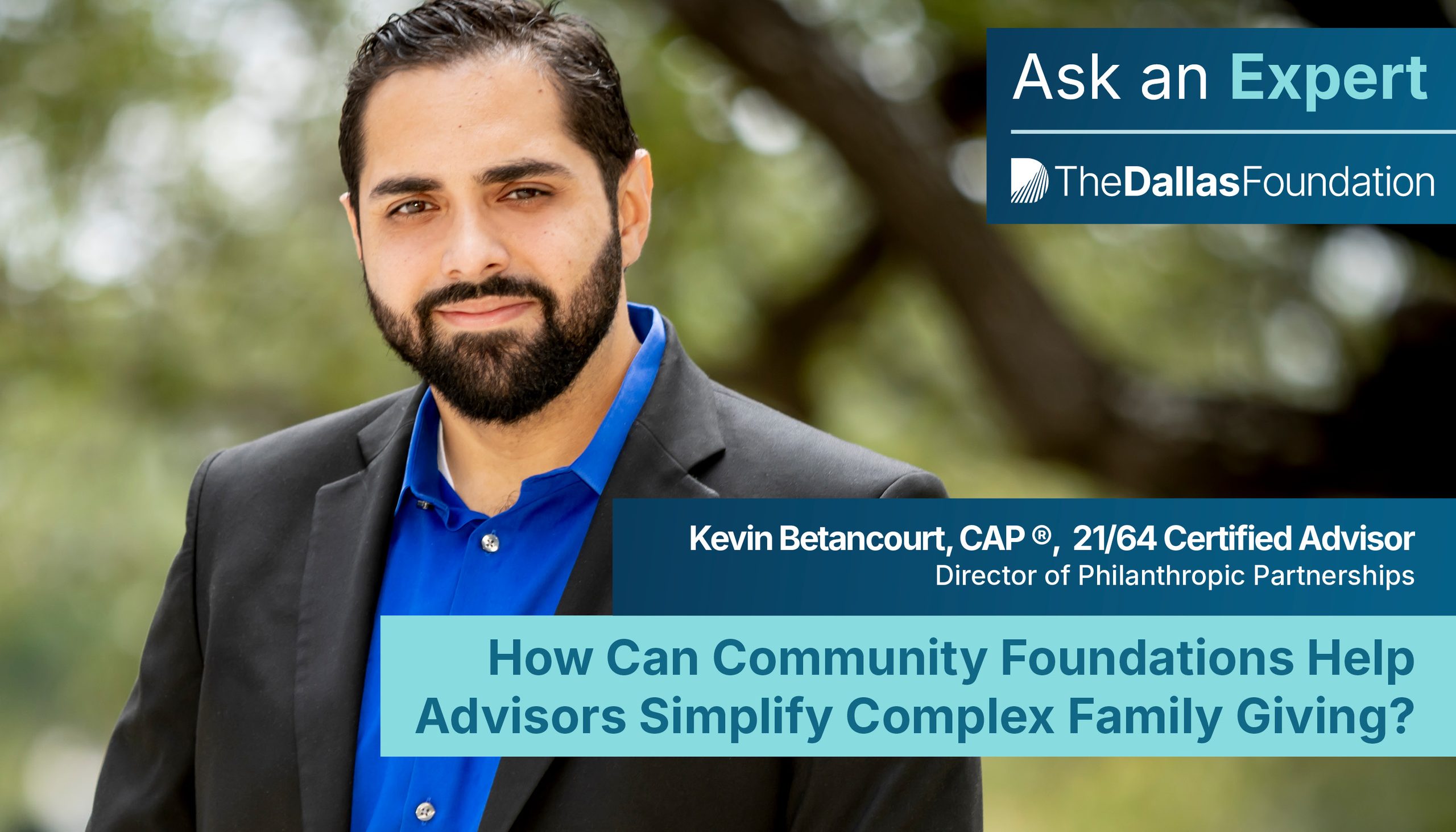
In this edition of Ask an Expert, Kevin Betancourt, CAP®, Director of Philanthropic Partnerships at The Dallas Foundation, shares how community foundations can help advisors bring clarity to a family’s giving and build a shared direction across generations.
Why can family giving become more complicated over time?
A family’s giving often grows gradually. Parents establish a fund, children develop their own charitable interests, and new commitments take shape. Each decision may make sense on its own, but the family may never pause to consider how it all fits together.
For an advisor, a useful starting point is a simple conversation: What are you supporting today? What do you want to continue? How would you like your family to be involved?
Those questions can reveal where the family shares a vision and where expectations differ. The Dallas Foundation can help families explore those priorities, giving advisors a clearer understanding of what their clients want to accomplish.
How can a community foundation help bring the pieces together?
A community foundation can help a family give each part of its philanthropy a clear purpose.
For example, a family might use a donor-advised fund to explore new charitable interests while an endowed fund provides ongoing support for a cause they have cared about for years. Both can contribute to the family’s overall goals.
The Dallas Foundation can help advisors and fundholders talk through those choices. Which commitments should continue? Where is there room for new ideas? How can younger family members participate?
With those answers in place, the family and its advisors can decide whether their existing arrangements still fit. Sometimes a change may help. Often, the most useful step is simply agreeing on what each fund is for and how the family will make decisions together.
What if family members have different priorities or expectations?
Different priorities can give a family’s philanthropy depth. One generation may value longstanding relationships with local organizations, while another wants to explore emerging needs or become more directly involved in evaluating potential grants.
The challenge is creating a decision process that gives those perspectives a meaningful place.
That begins with distinguishing shared commitments from individual interests. A family might agree on a common charitable focus while allowing room for members to recommend support for other causes, within the terms of the relevant fund or structure. Another family may choose a narrower shared purpose and pursue individual giving separately.
Clear expectations matter as much as shared values. Family members should understand who may recommend grants, who has approval authority, how disagreements will be addressed, and how new participants will learn their roles. Participation in a conversation does not necessarily confer legal authority over a charitable entity or fund.
The Dallas Foundation’s family philanthropy services include mission and values development, strategic planning, family meetings, and nonprofit research. These resources can help families turn broad intentions into a more workable approach to giving together.
How does this partnership support the professional advisor’s role?
A community foundation adds philanthropic expertise and community knowledge to the advisor’s existing understanding of the client.
Financial, legal, and tax advisors bring essential perspectives on assets, estate plans, and the implications of charitable decisions. The Dallas Foundation works alongside those professionals to explore giving strategies and connect charitable goals with opportunities for impact.
For the advisor, the value is a more complete conversation. A client’s question about opening another fund may reveal a desire to involve adult children. A discussion about an estate gift may uncover uncertainty about who will continue the family’s giving. Understanding that purpose helps the advisory team evaluate the available options.
Why does local knowledge matter in a complex giving strategy?
Once a family has clarified how it will give, it still needs to decide where its resources can be useful.
The Dallas Foundation can bring knowledge of community needs and nonprofit organizations into that discussion. Nonprofit research and grant review can help families ask more informed questions about an organization’s work and how a proposed gift fits their goals.
This gives advisors and families something concrete to plan around. Decisions about timing, grant size, and ongoing support become more meaningful when they connect to the work the family wants to advance.
When should advisors bring a community foundation into the conversation?
Early enough for the family’s charitable goals to shape the planning.
A business transition, estate plan review, or change in family leadership can provide a natural opening. So can a simpler observation: the family has several charitable arrangements, but no one can readily explain how they fit together.
An advisor might ask, “If we looked at all of your family’s giving together, would it reflect what matters most to you today?”
The answer can reveal whether the next step is a family conversation, a review of existing commitments, or a closer examination of a particular structure. Establishing a regular review also gives the family a way to revisit decisions as circumstances change.
Bringing Clarity to a Family’s Charitable Future
Successful family philanthropy depends on people understanding the purpose of their giving and the responsibilities they share. As charitable arrangements become more complex, that understanding needs attention alongside the financial and legal planning.
The Dallas Foundation helps advisors and fundholders connect those conversations with the community they want to serve. With clear roles and an intentional approach, a family’s charitable resources can support a shared direction while making room for new generations to participate.